Dr Joshua RaseraMineral Processing & Resource Systems
MINERAL PROCESSING / PHYSICAL SEPARATIONS

It starts
with the particles.

What makes one particle behave differently from another, and how can we use that difference?

My research combines experiments, discrete element modelling and flowsheet thinking to develop dry processing methods. The goal is to understand separation performance in the context of water, energy and material constraints.

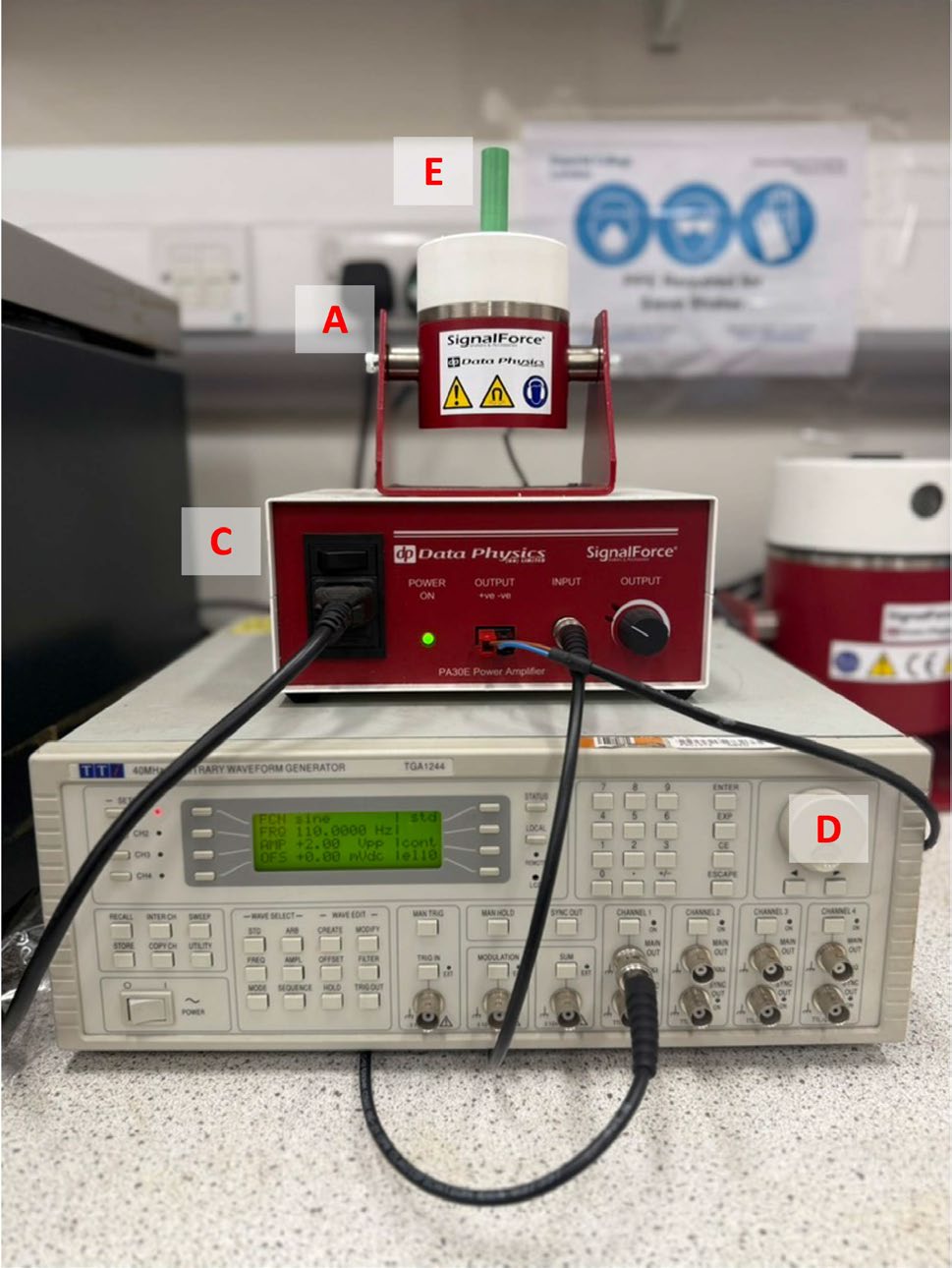
Vibration test apparatus used in the published regolith segregation study
Vibration experiment at ESA ESTEC. Figure 1b: Rasera et al. (2025) · CC BY 4.0.
TWO WAYS TO PREPARE A BETTER FEED
01 / MINERAL ENRICHMENT

A difference
that separates.

Explore how particle properties can enrich a mineral fraction: from contact charging and electrostatic separation to terrestrial dry beneficiation.

Includes the contact-charging and free-fall separation demonstration.

Explore mineral enrichment ↗
02 / SIZE CLASSIFICATION

Prepare the feed.
Understand the bed.

Look inside shaken Apollo regolith and simulants, and explore how differences in particle size influence granular segregation.

Includes the Brazil nut effect demonstration.

Explore size classification ↗

Looking for terrestrial dry processing? Explore material characterisation, separation testing and flowsheet evaluation ↗

Go directly to the Brazil nut effect demonstration ↗

Go directly to the electrostatic separation demonstration ↗

THE PROCESSING PROBLEM

A resource is rarely
ready to use.

Valuable minerals come mixed with other material. Before extraction, we need to understand and prepare that feed.

Beneficiation changes the composition or properties of a feed by separating particles. It can mean enriching a mineral fraction, classifying material by size, or removing material that complicates downstream processing.

I focus on physical separation and dry beneficiation: using differences in particle behaviour while reducing reliance on water. Lunar processing takes those constraints further, raising questions about vacuum, gravity, dust and material handling.

HOW I INVESTIGATE IT

Experiments
meet models.

01

Measure behaviour

Physical experiments connect design choices to particle charging, movement and separation.

02

See the structure

Micro-CT reveals internal arrangements that a surface photograph cannot explain.

03

Interrogate the mechanism

Particle-scale and mechanistic models help investigate why a material responds as it does.

THE NEXT SCALE

How does a better process
become a better system?

Strategic engineering & resource value chains ↗